
Serengeti National Park.
The Serengeti National Park is one of Africa’s most iconic safari destinations, known for its vast open plains, extraordinary wildlife, and the world-famous Great Migration. From dramatic predator hunts to endless golden horizons dotted with acacia trees, a Serengeti safari offers one of the most immersive wildlife experiences on Earth. In this expert guide, you’ll discover the best time to visit, where to go, what to expect, and how to plan your perfect safari — whether you’re seeking a luxury escape, a mid-range adventure, or a once-in-a-lifetime journey into the wild heart of Tanzania.
The Serengeti ecosystem is home to the largest concentration of wildlife in Africa, including lions, elephants, leopards, cheetahs, and over two million wildebeest and zebras that move in a continuous cycle across the plains. Whether you’re witnessing river crossings in the north or calving season in the south, every part of the Serengeti offers a unique and unforgettable safari experience. Understanding these seasonal movements is key to planning the right trip — and this guide will help you do exactly that.
Jump to section:
- 1. Where is Serengeti National Park?
- 2. Why Serengeti National Park is Special
- 3. Serengeti National Park Wildlife
- 4. The Great Migration in Serengeti National Park
- 5. Best Time to Visit Serengeti National Park
- 6. Safari Experiences in Serengeti National Park
- 7. Were to Stay in Serengeti National Park
- 8. Frequently Asked Questions About Serengeti National Park
- 9. Related Guides and Itineraries
- 10. Plan Your Serengeti National Park Safari
1. Where is Serengeti National Park?
The Serengeti National Park is located in northern Tanzania, forming part of the larger Serengeti ecosystem that extends into southwestern Kenya, where it connects with the famous Maasai Mara National Reserve. The park lies approximately 325 kilometers (200 miles) northwest of Arusha, the main gateway for most safari travelers, and is one of the most accessible and well-connected safari destinations in East Africa.
Covering nearly 15,000 square kilometers, the Serengeti is bordered by several important conservation areas, including the Ngorongoro Conservation Area to the southeast and the Grumeti Game Reserve to the west. Together, these regions form a vast, protected ecosystem that supports one of the largest and most diverse wildlife populations on the continent.
Most visitors reach the Serengeti by flying into Kilimanjaro International Airport near Arusha, followed by a short domestic flight to one of the park’s airstrips or a scenic overland safari journey through northern Tanzania. Its location within this interconnected network of parks makes it easy to combine the Serengeti with other iconic destinations for a complete safari experience.
Serengeti Location at a Glance
- 📍 Country: Tanzania
- 🌍 Region: Northern Tanzania
- ✈️ Nearest Airport: Kilimanjaro International Airport
- 🚙 Main Access Point: Arusha
- 🐘 Nearby Parks: Ngorongoro, Maasai Mara
2. Why Serengeti National Park is Special
The Serengeti National Park stands apart as one of the most extraordinary wildlife destinations in the world, not just for its beauty, but for the scale and authenticity of its ecosystem. Unlike many safari locations, the Serengeti offers a truly wild and uninterrupted landscape where nature unfolds exactly as it has for thousands of years. Here, vast plains stretch beyond the horizon, predators roam freely, and one of the greatest natural events on Earth — the Great Migration — takes place in a continuous, living cycle.
- Unmatched Wildlife Density.
The Serengeti is home to one of the highest concentrations of wildlife in Africa. Large prides of lions, elusive leopards, powerful elephants, and vast herds of wildebeest and zebras can all be seen within a single game drive, making every safari rich with sightings and unforgettable moments.
- The Great Migration
Nowhere else on Earth can you witness the movement of over two million animals across a single ecosystem. This continuous journey, driven by rainfall and survival, defines the Serengeti and creates dramatic encounters — from river crossings to predator hunts.
- Endless Open Plains.
The Serengeti’s iconic landscapes are defined by vast, open savannahs that allow for exceptional wildlife viewing. The visibility here is unmatched, making it easier to spot animals and experience the true scale of the African wilderness.
- Year-round Safari Destination.
Unlike many parks that are seasonal, the Serengeti offers incredible wildlife viewing throughout the year. Each season brings a different highlight — from calving in the south to river crossings in the north — ensuring there is never a bad time to visit.
- A UNESCO World Heritage Site
Recognized globally for its ecological importance, the Serengeti is a protected ecosystem that preserves one of the last remaining natural migrations on Earth, making every visit not just a safari, but a journey into one of the planet’s most important natural environments.
📅 Plan Your Serengeti Safari with Confidence
Planning a safari in the Serengeti National Park goes beyond simply choosing a destination — it’s about timing your visit with wildlife movements, selecting the right region, and creating an experience that matches your expectations. With so many options available, having the right guidance makes all the difference.
At Twombili Tours, we specialize in crafting tailor-made safaris across Tanzania, helping you navigate every detail — from the Great Migration and wildlife hotspots to accommodation choices and travel logistics — ensuring your Serengeti journey is seamless, rewarding, and truly unforgettable.
- Local Experts.
- Tailor-made Itineraries.
- Fast Response Within 24 Hours.
3. Serengeti National Park Wildlife
The Serengeti National Park is home to one of the richest and most diverse wildlife populations on Earth. With vast open plains, permanent water sources, and a balanced ecosystem, the park supports an extraordinary concentration of animals — from powerful predators to massive herbivore herds and over 500 species of birds. Whether you are visiting for the first time or returning for another safari, the Serengeti offers unmatched opportunities to witness wildlife in its most natural and dramatic form.
- 🐾 The Big Five in Serengeti
The Serengeti is one of the best places in Africa to see the famous Big Five — lion, leopard, elephant, buffalo, and rhinoceros — all within a single ecosystem.
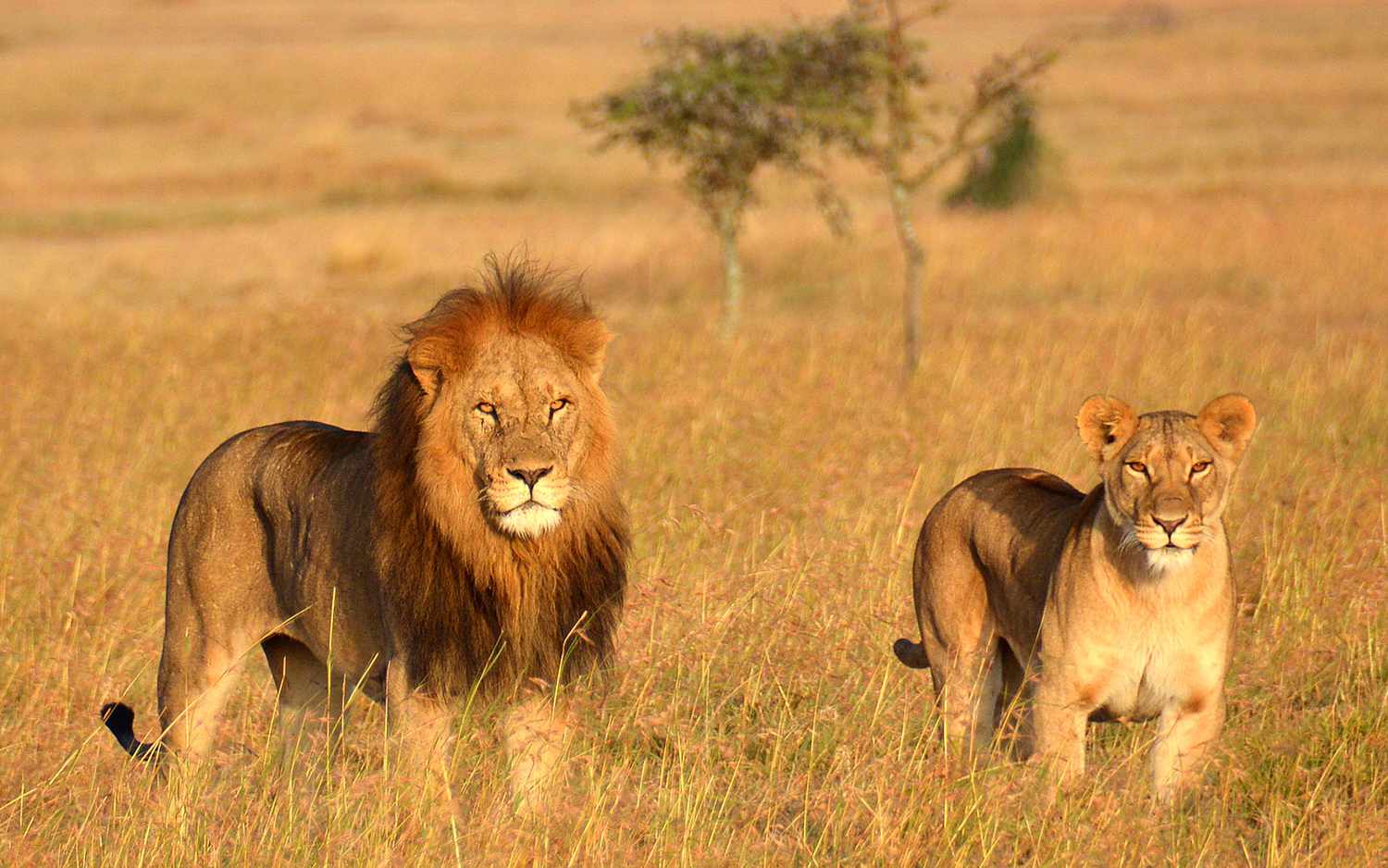
Lions – The Serengeti has one of the largest lion populations in Africa, often seen resting on kopjes or hunting across the plains.
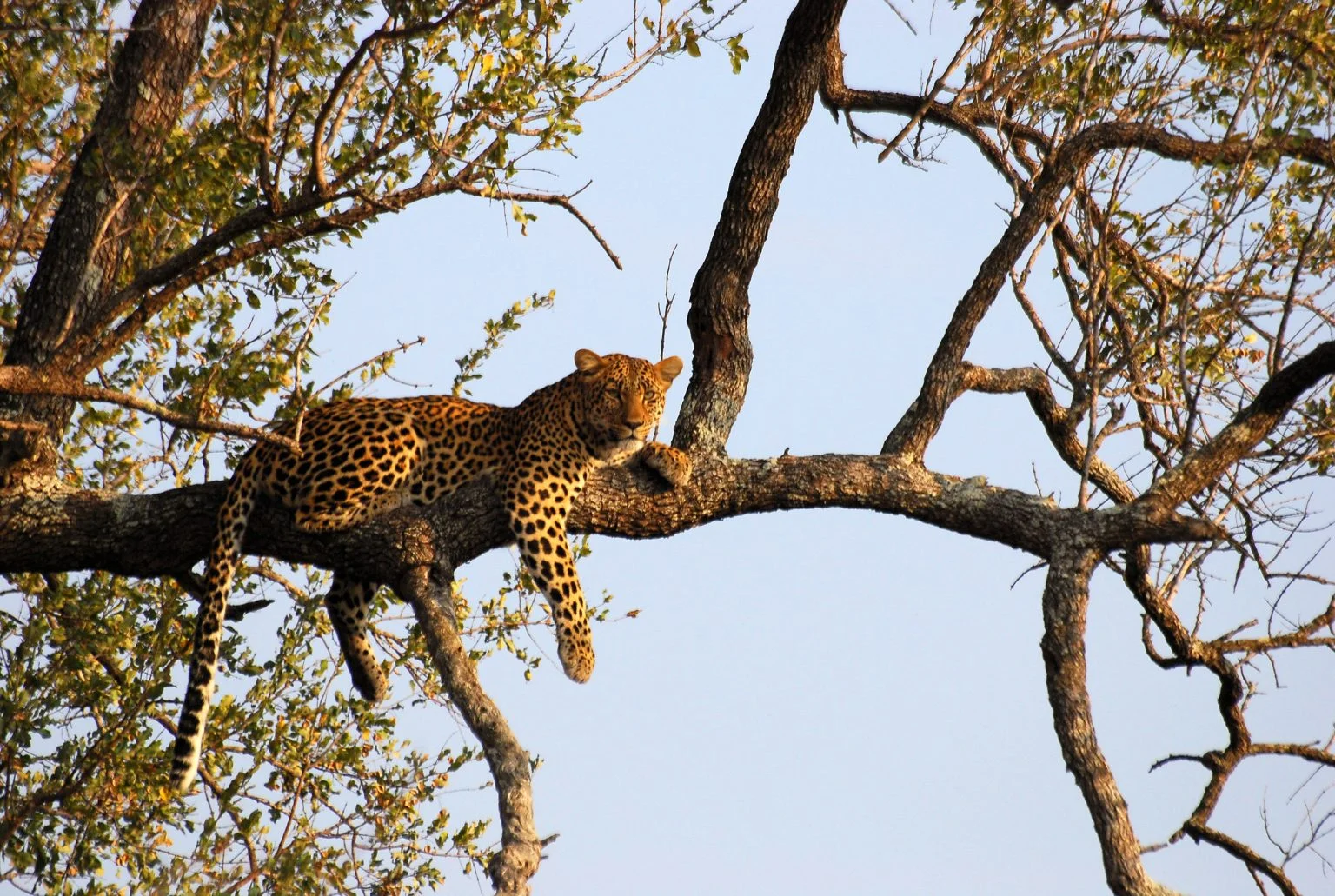
Leopards – More elusive but frequently spotted in riverine areas, especially around central Serengeti.
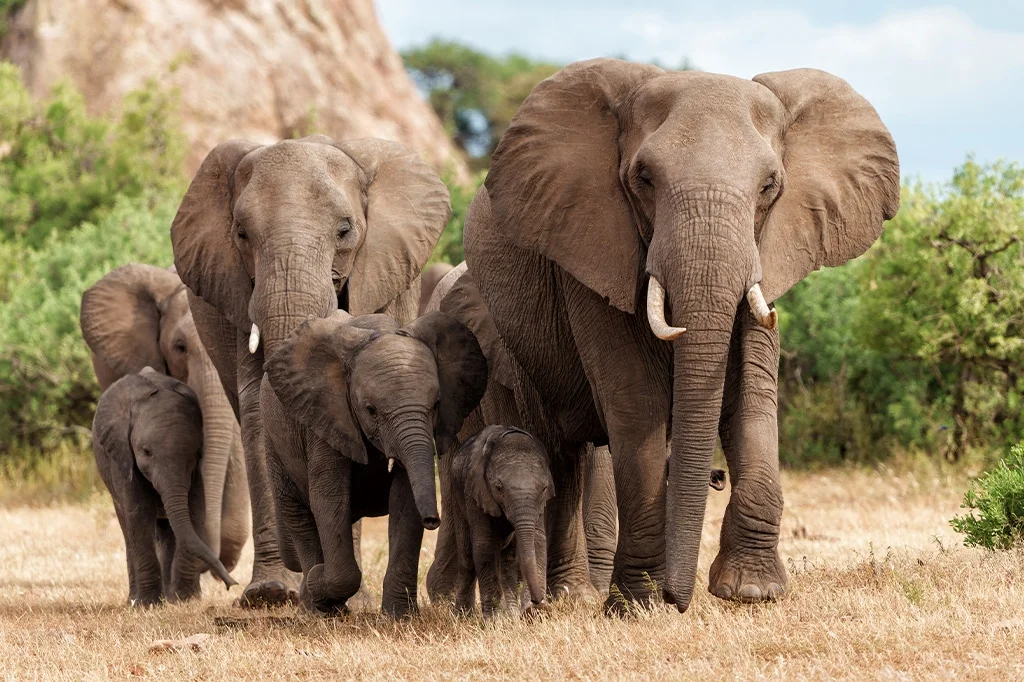
Elephants – Commonly found in herds, particularly in woodland and river areas.
Buffalo – Large herds roam the plains and are seen year-round.
Rhinoceros – Rare, but can be found in protected areas, especially around the northern and central regions.
- 🐆 Predators of the Serengeti
The Serengeti is famous for its predator density, making it one of the best places in the world to witness real-time hunting behavior.
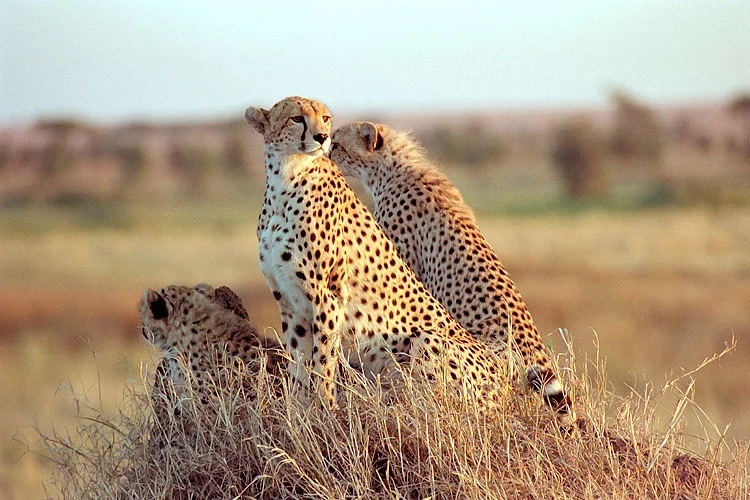
Cheetahs – Frequently seen in open plains, using speed to hunt gazelles.
Hyenas – Highly intelligent and often underestimated, they play a key role in the ecosystem.
African wild dogs – Rare but occasionally seen in certain regions.
Jackals and servals – Smaller predators that add to the diversity of sightings.
- 🐘 Herbivores and Grazing Animals
The plains of the Serengeti are dominated by vast numbers of herbivores, forming the backbone of the ecosystem.
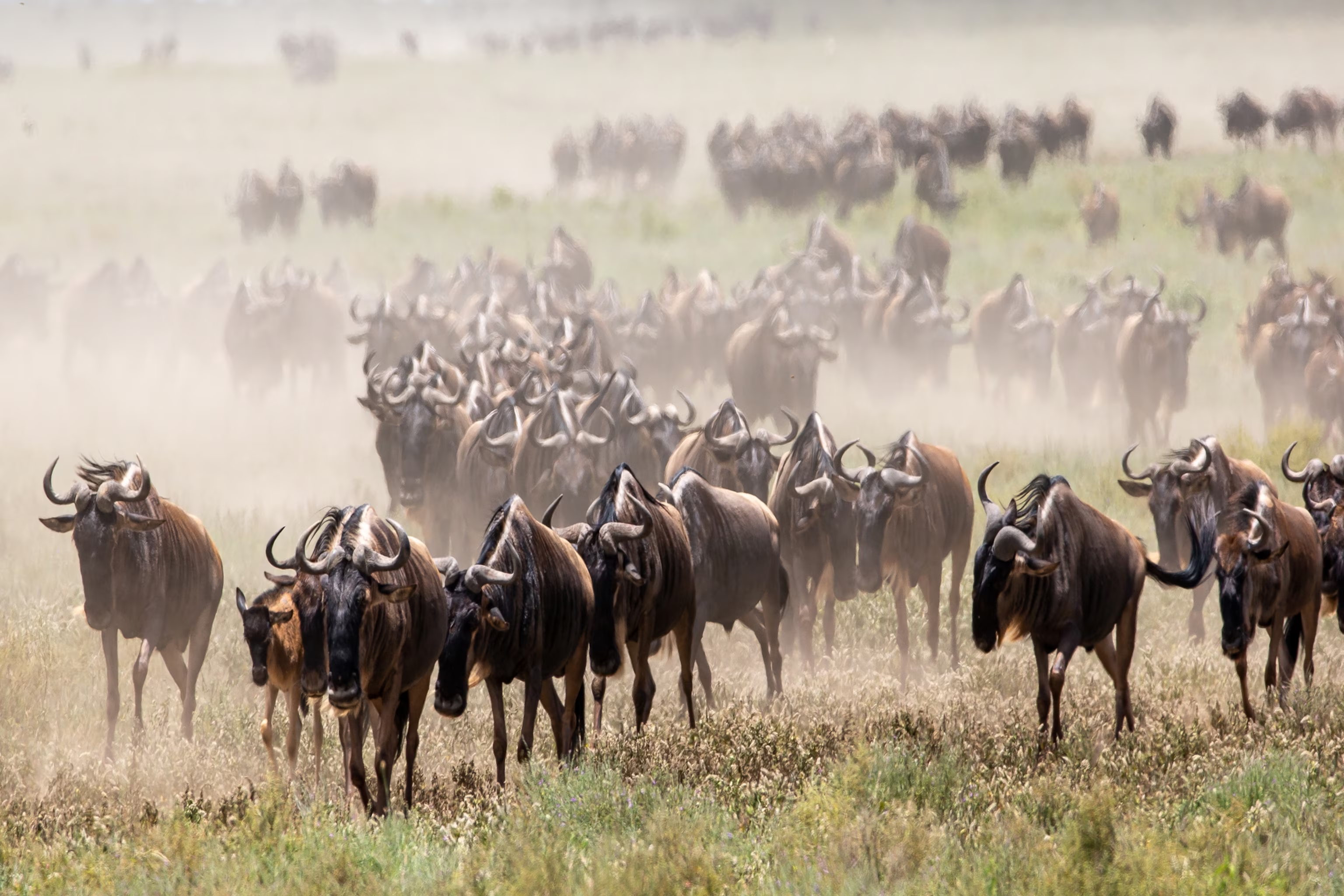
Wildebeest – Over 1.5 million individuals form the core of the Great Migration.
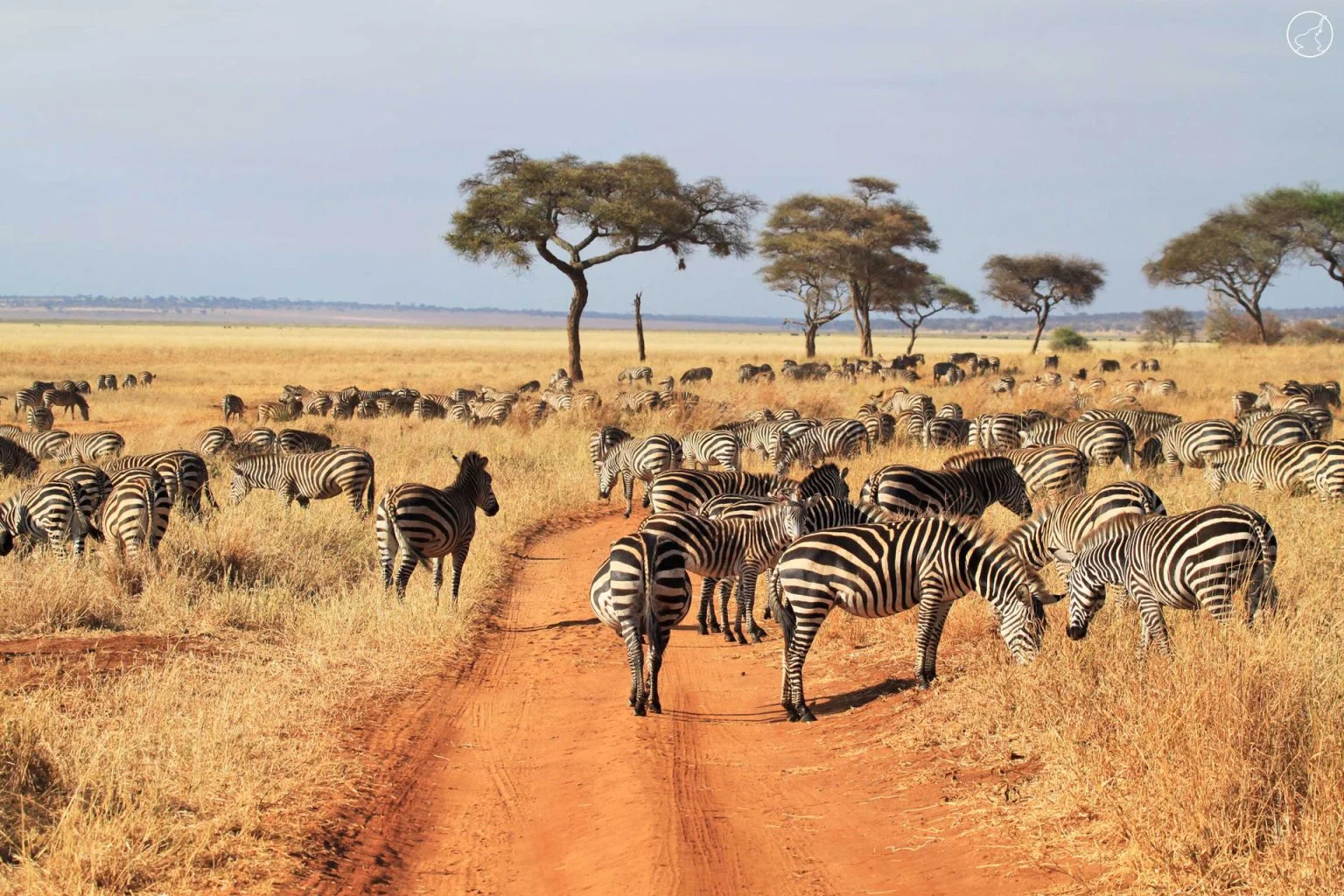
Zebras – Travel alongside wildebeest, adding to the spectacle.
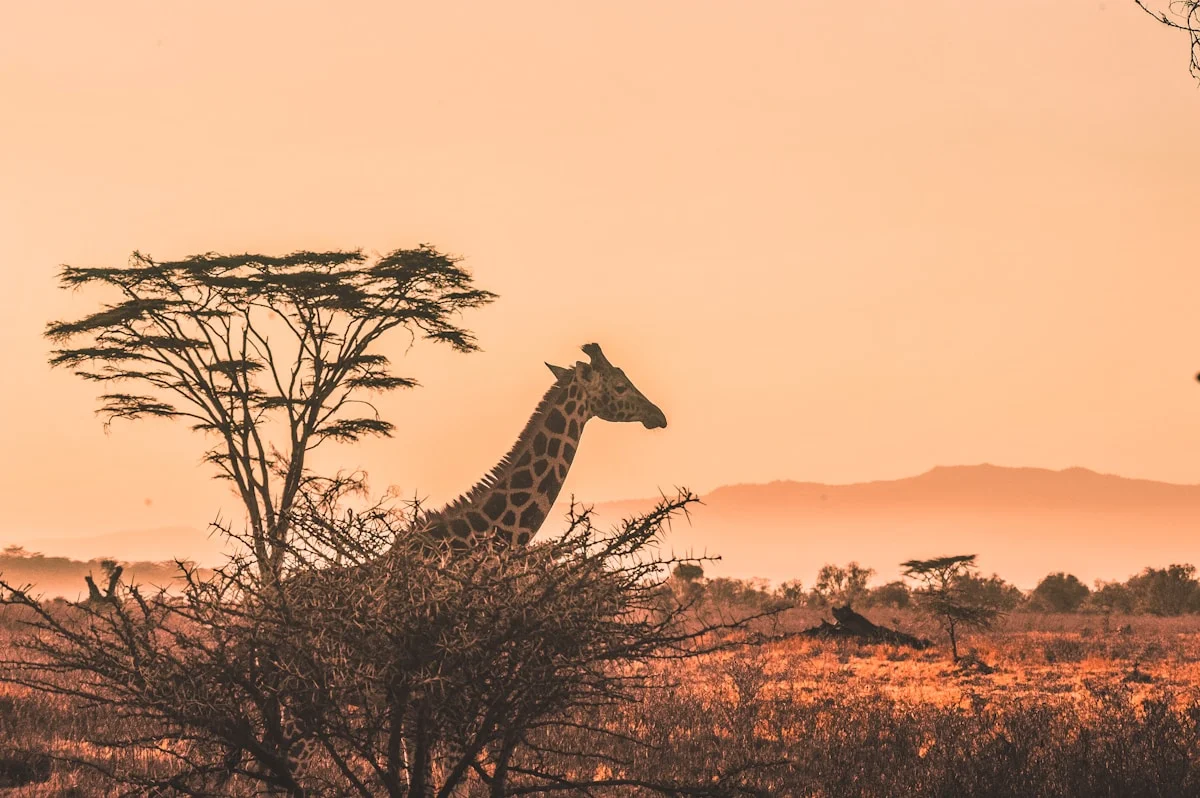
Giraffes – Commonly seen browsing acacia trees across the park.
Antelopes – Including gazelles, impalas, and elands.
Hippos – Found in rivers and pools, often in large groups.
- 🐃 The Great Migration Species
The Serengeti is globally known for the Great Migration, where millions of animals move in search of fresh grazing.
Wildebeest
Zebras
Gazelles
This movement attracts predators and creates one of the most dramatic wildlife spectacles on Earth.
- 🦅 Birdlife in the Serengeti
With over 500 recorded bird species, the Serengeti is also a paradise for bird lovers.
Ostriches – The world’s largest birds, commonly seen in open areas.
Secretary birds – Unique ground hunters with striking appearance.
Eagles and vultures – Often seen circling above predator activity.
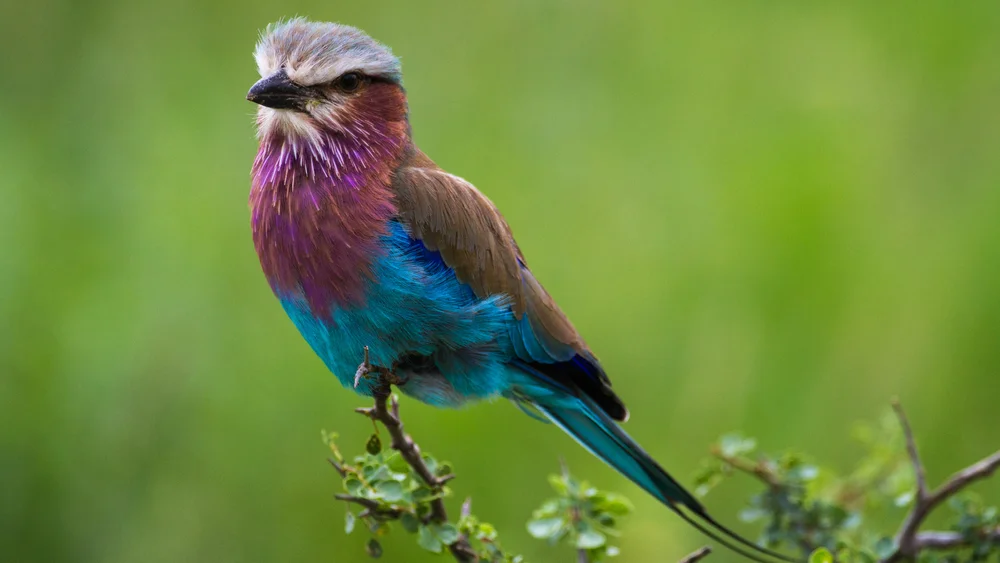
Colorful species – Including lilac-breasted rollers and bee-eaters.
4. The Great Migration in Serengeti National Park
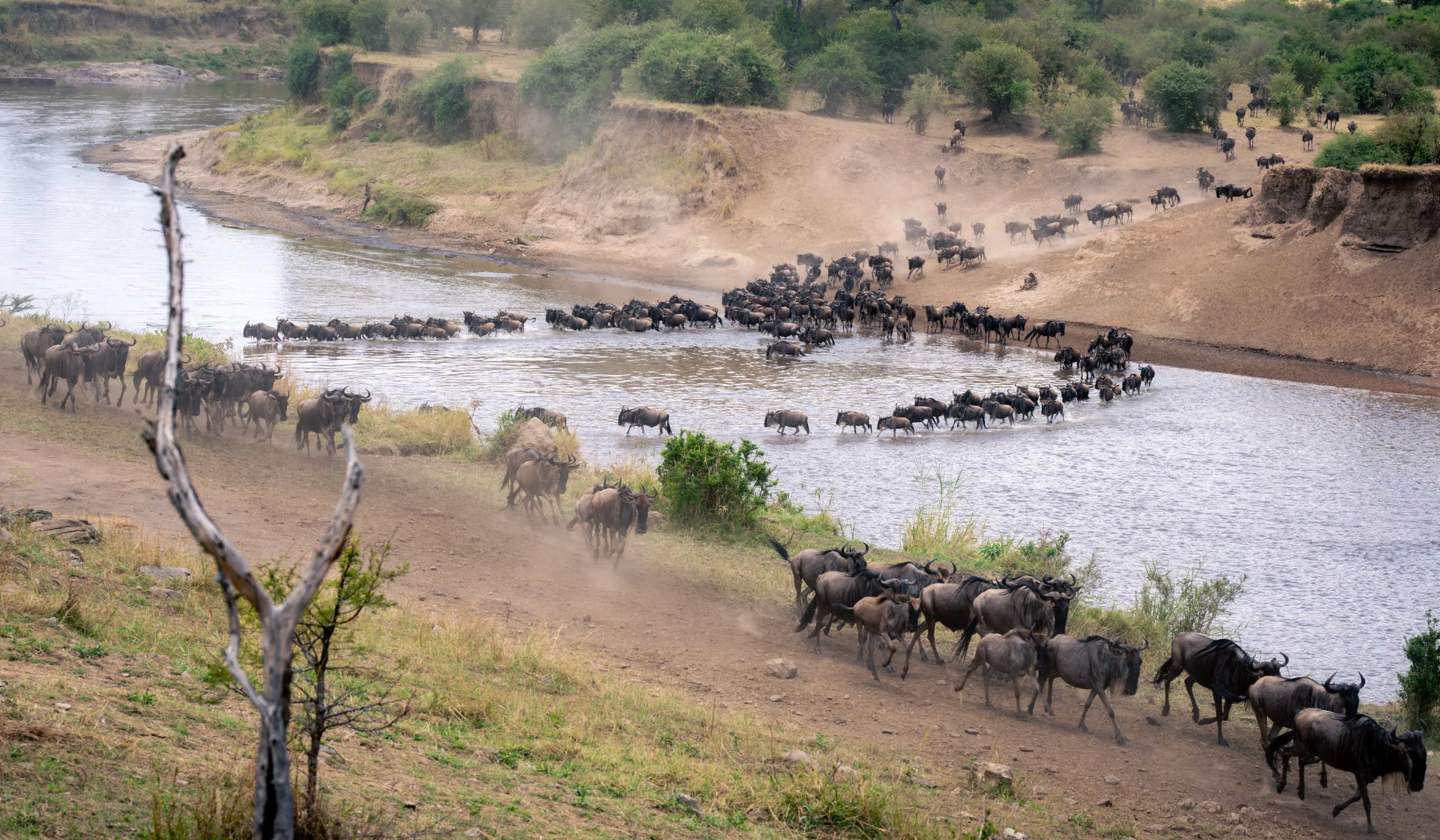
The Great Migration in the Serengeti National Park is one of the most extraordinary wildlife spectacles on Earth. Each year, over two million wildebeest, zebras, and gazelles move across the Serengeti ecosystem in a continuous cycle driven by rainfall and the search for fresh grazing. This natural movement is not a single event, but an ongoing journey that unfolds throughout the year, offering different experiences depending on when and where you visit.
- 🐃 What is the Great Migration?
The Great Migration is a year-round movement of animals across northern Tanzania and into Kenya’s Maasai Mara. Unlike seasonal migrations in other parts of the world, this is a continuous loop where herds follow the rains in search of water and nutrient-rich grass. Along the way, they face dramatic challenges — from river crossings filled with crocodiles to constant threats from predators such as lions and hyenas.
- 📍 Migration Route & Key Areas
The migration follows a general circular path through the Serengeti ecosystem:
Southern Serengeti (Dec – March)
Calving season, where thousands of wildebeest are born each dayCentral Serengeti (April – June)
Herds begin moving northwest as the rains endWestern Corridor (May – July)
Grumeti River crossings beginNorthern Serengeti (July – October)
Famous Mara River crossings — the most dramatic phaseReturn South (November)
Herds move back toward the southern plains
- 🐊 River Crossings — The Most Dramatic Moments
River crossings, especially in the northern Serengeti, are among the most sought-after safari experiences. Here, thousands of wildebeest gather at the riverbanks before making sudden, chaotic attempts to cross crocodile-filled waters. These moments are unpredictable, intense, and unforgettable — often defining a once-in-a-lifetime safari.
- 📅 Best Time to See the Migration
There is no single “best” time — it depends on what you want to experience:
Calving Season (Jan – March) → best for newborn wildlife and predator action
Movement Season (April – June) → fewer crowds, scenic landscapes
River Crossings (July – October) → most dramatic and popular
Return Phase (Nov – Dec) → quieter, transitional period
- 🌍 Why the Migration is Unique
What makes the Serengeti migration truly special is its scale and natural continuity. Nowhere else in the world can you witness such a vast number of animals moving freely across an intact ecosystem, interacting with predators and the environment in real time. It is one of the last remaining natural migrations on Earth — and one of the most powerful reasons to visit the Serengeti.
5. Best Time to Visit Serengeti National Park
The best time to visit the Serengeti National Park depends on what you want to experience. Thanks to its diverse ecosystem and year-round wildlife activity, the Serengeti offers exceptional safari opportunities in every season. However, different times of the year highlight different aspects of the park — from the dramatic river crossings of the Great Migration to the quieter, scenic months with fewer crowds.
- 🌍 Serengeti Seasons at a Glance
The Serengeti has two main seasons that shape the safari experience:
Dry Season (June – October)
Best for wildlife viewing and river crossingsGreen Season (November – May)
Best for scenery, birdlife, and calving season
- 🐃 Best Time for the Great Migration
If your goal is to witness the Great Migration, timing and location are key:
December – March (Southern Serengeti)
Calving season with thousands of newbornsApril – June (Central & Western Serengeti)
Herds on the move, fewer crowdsJuly – October (Northern Serengeti)
Mara River crossings — peak dramaNovember
Herds begin returning south
- 🐾 Best Time for Wildlife Viewing
For general wildlife sightings:
June – October (Dry Season)
Animals gather around water sources, making them easier to spotJanuary – March
Excellent predator activity during calving season
- 🌿 Best Time for Scenery & Photography
November – May (Green Season)
Lush landscapes, dramatic skies, and fewer touristsIdeal for photographers and travelers seeking a quieter experience
- 🦅 Best Time for Birdwatching
November – April
Migratory birds arrive, and resident species are more active and colorful
📅 Serengeti Month-by-Month Guide
Understanding how the Serengeti National Park changes throughout the year helps you plan a safari that perfectly matches your expectations.
- January – March
Calving season in Southern Serengeti
Excellent predator activity
Lush green landscapes
👉 Best for: wildlife action + photography
- April – May
Long rains season
Fewer tourists, lower prices
Dramatic skies and scenery
👉 Best for: quiet, scenic safaris
- June
Start of dry season
Migration begins moving north
Great balance of wildlife and fewer crowds
- July – August
Peak season
Mara River crossings begin
High predator activity
👉 Best for: dramatic migration moments
- September – October
Continued river crossings in Northern Serengeti
Excellent wildlife visibility
👉 Best for: classic safari experience
- November
Short rains begin
Migration starts moving south
👉 Best for: fewer crowds
- December
Herds return to Southern Serengeti
Green landscapes return
👉 Best for: calving buildup + scenery
- ⚖️ So, When Should You Visit?
There is no single “perfect” time to visit the Serengeti — only the best time for your specific interests. Whether you want to witness river crossings, see newborn wildlife, or enjoy a quieter safari surrounded by green landscapes, the Serengeti offers something unique throughout the year.
- ⚡ Quick Recommendation
If you’re visiting the Serengeti National Park for the first time:
👉 July – October → best for dramatic wildlife & river crossings
👉 January – March → best for calving season & predator action
👉 November – May → best for scenery & fewer crowds
6. Serengeti National Park Safari Experience
A safari in the Serengeti National Park is far more than just spotting wildlife — it’s about how you experience it. From classic game drives across endless plains to unforgettable moments floating above the savannah at sunrise, the Serengeti offers a wide range of safari experiences designed to suit every travel style, pace, and level of adventure.
- 🚙 Game Drives — The Classic Safari Experience
Game drives are the heart of any Serengeti safari. Led by experienced guides, these drives take you deep into the park in search of wildlife, offering close encounters with lions, elephants, cheetahs, and more.
Morning drives → active predators and golden light
Afternoon drives → relaxed sightings and scenic landscapes
Full-day drives → maximum exploration and flexibility
👉 Best for: first-time visitors and all-around wildlife viewing
- 🎈 Hot Air Balloon Safaris — A Unique Perspective
One of the most unforgettable ways to experience the Serengeti is from above. A sunrise hot air balloon safari offers a शांत, panoramic view of the plains, where you can watch herds move below as the landscape comes to life.
Aerial views of wildlife and landscapes
Peaceful, once-in-a-lifetime experience
Often followed by a bush breakfast
👉 Best for: luxury travelers and special occasions
- 🚶 Walking Safaris — Experience the Wild Up Close
Walking safaris offer a completely different perspective, allowing you to explore the Serengeti on foot with a trained guide and ranger.
Focus on tracks, plants, and smaller wildlife
Deeper connection with nature
Slower, more immersive experience
👉 Best for: adventurous travelers
- 🌙 Night Game Drives (Where Available)
In select areas and private concessions, night drives reveal a hidden side of the Serengeti.
Spot nocturnal animals
Unique predator behavior
Different atmosphere from daytime safaris
👉 Best for: returning visitors and unique sightings
- 🏕️ Cultural & Bush Experiences
Beyond wildlife, the Serengeti region also offers opportunities to connect with local culture and enjoy unique bush experiences.
Visits to nearby Maasai communities
Bush meals in scenic locations
Sundowners overlooking the plains
👉 Best for: well-rounded safari experience
- 📸 Photography Safaris
The Serengeti is a dream destination for photographers, offering incredible lighting, dramatic landscapes, and constant wildlife action.
Golden hour game drives
Migration-focused trips
Expert-guided photography tours
👉 Best for: photography enthusiasts and content creators
7. Where to Stay in Serengeti National Park
Choosing where to stay in the Serengeti National Park plays a huge role in shaping your safari experience. From immersive tented camps deep in the wilderness to comfortable lodges with sweeping views, each accommodation option offers a different balance of comfort, location, and connection to nature.
- 🏕️ Tented Camps — Immersive Safari Experience
Tented camps offer the most authentic way to experience the Serengeti, placing you right in the heart of the wilderness.
What you’ll experience:
Sleeping surrounded by nature, often hearing lions or hyenas at night
Being close to wildlife activity, sometimes with animals passing near camp
Waking up to sunrise over the plains
Typical amenities include:
Comfortable beds with en-suite bathrooms
Hot (often solar-heated) showers
Dining tents or open-air meals under the stars
Campfires and intimate lounge areas
👉 Best for: authentic safari lovers who want to feel fully immersed in the wild
- 🏨 Safari Lodges — Comfort with a View
Safari lodges offer a balance between wilderness and modern comfort, often set in scenic locations within or near the park.
What you’ll experience:
Panoramic views of the plains or nearby wildlife areas
Relaxing between game drives in a more structured environment
A quieter, more stable base for your safari
Typical amenities include:
Spacious rooms with private bathrooms
Swimming pools and viewing decks
On-site restaurants and bars
Wi-Fi in common areas (and sometimes rooms)
Reliable electricity
👉 Best for: travelers who want comfort while still enjoying the Serengeti landscape
- 🌍 Luxury Camps & Lodges — Exclusive Wilderness Experience
Luxury accommodations elevate the safari experience with privacy, prime locations, and exceptional service.
What you’ll experience:
Front-row access to wildlife in premium locations
Private decks with uninterrupted views of the savannah
Highly personalized service and curated experiences
Typical amenities include:
Large suites or villas with premium furnishings
Fine dining and curated menus
Butler or personalized service
Spa and wellness options (in select properties)
Exclusive, low-density environments
👉 Best for: honeymooners, luxury travelers, and once-in-a-lifetime safaris
- 🎒 Budget Options — Accessible Safari Experience
Budget options make it possible to explore the Serengeti without compromising the core safari experience.
What you’ll experience:
Guided game drives and close access to wildlife
A more adventurous, back-to-basics safari feel
Opportunities to explore nearby towns or local areas (depending on location)
Typical amenities include:
Simple tents or lodge rooms
Shared or private bathroom facilities
Essential services focused on practicality
Organized safari packages
👉 Best for: budget-conscious travelers and adventure seekers
- 📍 Staying Inside vs Outside the Serengeti
Where you stay — inside or near the Serengeti National Park — can significantly shape your experience.
- Inside the Park
Experience:
Immediate access to wildlife and game drives
Early morning and late evening safari opportunities
Full immersion in nature, including sounds of wildlife at night
👉 Best for: maximizing wildlife encounters
- Outside the Park
Experience:
Easier access to towns, local culture, and markets
More flexibility in accommodation pricing
A mix of safari and cultural experiences
👉 Best for: combining safari with local exploration
- ⚡ Quick Recommendation
If you’re visiting the Serengeti National Park for the first time:
👉 Stay inside the park for the most immersive wildlife experience
👉 Choose Central Serengeti for consistent year-round sightings
👉 Go North for migration crossings (seasonal)
👉 Stay South during calving season
8. Frequently Asked Questions About Serengeti National Park
1. What is the best time to visit Serengeti National Park?
The best time to visit depends on your safari goals. June–October is ideal for general wildlife viewing and Mara River crossings during the Great Migration, while January–March offers excellent predator activity and calving season. The green season (Nov–May) provides lush scenery, birdlife, and fewer crowds.
2. What animals can I see in the Serengeti?
The Serengeti hosts one of the richest wildlife populations in Africa, including the Big Five (lion, leopard, elephant, buffalo, and rhinoceros), cheetah, hyena, wildebeest, zebra, giraffe, hippo, crocodile, and over 500 bird species. Wildlife sightings can vary by season and location.
3. How long should a Serengeti safari be?
A typical Serengeti safari ranges from 5 to 10 days. Short safaris (3–4 days) offer a good introduction, while 7–10 days provide time to explore multiple regions, including the Northern, Central, and Southern Serengeti, and maximize your chances of witnessing migration events.
4. Is Serengeti safe for tourists?
Yes. Serengeti National Park is considered one of the safest safari destinations in Africa. Safari lodges and camps operate within protected areas with highly trained guides, and park authorities enforce rules to ensure visitor safety. Standard safari precautions apply, such as remaining in vehicles during game drives unless guided otherwise.
5. Do I need a visa to go on a Serengeti safari?
Most international visitors require a tourist visa for Tanzania. e‑visas are available online, and visa‑on‑arrival is offered at major entry points. Always check your nationality’s specific requirements before travel.
6. What is the Great Migration and where can I see it?
The Great Migration is the annual movement of over two million wildebeest, zebras, and gazelles across the Serengeti‑Mara ecosystem, driven by rain and grazing. Seasonal highlights include calving season in the southern plains (Dec–Mar) and river crossings in the northern Serengeti (Jul–Oct).
7. Are park fees included in safari packages?
In many safari packages, national park entry fees and conservation levies are included, but this varies by operator. With Twombili Tours, most itineraries include all national park fees, but always confirm when booking.
8. What types of accommodation are available in the Serengeti?
Accommodation ranges from budget tented camps and mid‑range safari lodges to luxury camps and exclusive lodges. Options vary in amenities, location, and how close they are to wildlife zones. Choosing the right base depends on your comfort preference and safari focus.
9. Can I self‑drive in the Serengeti?
Self‑drive safaris are possible but not recommended for first‑time visitors. Roads can be rough and confusing, and wildlife viewing is best guided by professionals who know animal behavior and seasonal patterns.
10. What should I pack for a Serengeti safari?
Essentials include:
Neutral‑colored clothing
Wide‑brimmed hat & sunglasses
Sturdy walking shoes
Binoculars & camera gear
Sunscreen & insect repellent
Personal medications
Pack according to the season you’re visiting, and remember that early mornings and evenings can be chilly in the dry season.
9. Plan Your Serengeti National Park Safari
There’s a moment in Serengeti National Park that stays with you forever — when the golden plains stretch endlessly before you, wildlife moves freely in every direction, and the rhythm of nature replaces everything else. Whether it’s witnessing the raw power of the Great Migration, waking up to distant lion calls, or watching the sun set over the savannah, this isn’t just a trip — it’s a deeply personal experience. The difference lies in how you experience it. With carefully crafted itineraries, expert local guides, and seamless planning, your safari becomes effortless, immersive, and unforgettable.
Now is the time to turn that dream into reality — your Serengeti story is waiting to be written.
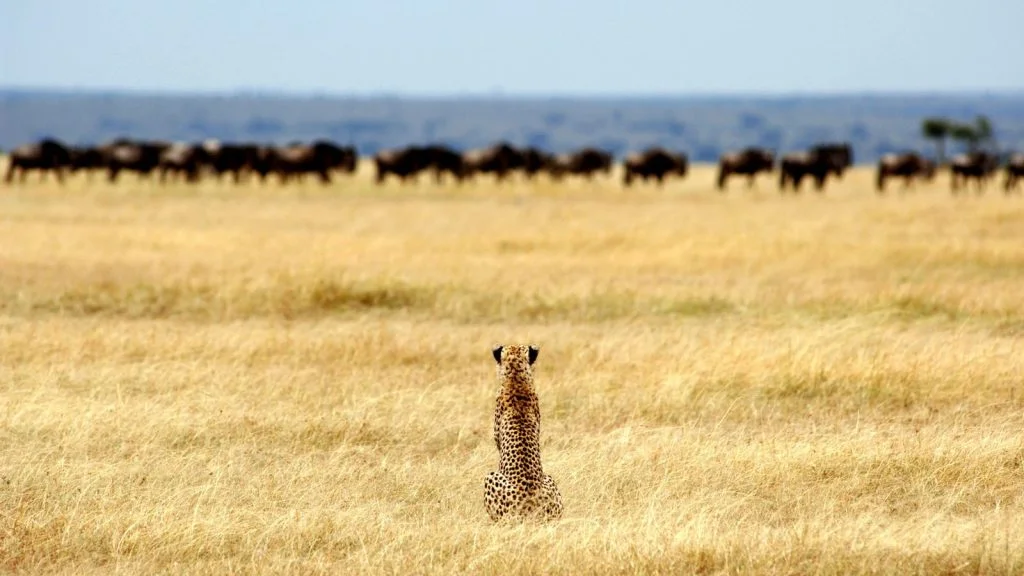
A cheetah observing a large herd of wildebeest in Serengeti National Park.
Serengeti Quick Facts
- Location: Northern Tanzania.
- Size: 14,750 km².
- Famous For: The Great Migration.
- Wildlife: Big Five & 500+ bird species.
- UNESCO Status: World Heritage Site.
- Best Time: June – October (wildlife), Jan – March (calving).
Serengeti Safari Highlights
- See the Big Five in their natural habitat.
- Endless golden plains and iconic African landscapes.
- Year-round wildlife viewing opportunities.
- Hot air balloon safaris at sunrise.
- World-class photography conditions.
- Authentic safari experiences in vast wilderness.
- Exceptional predator sightings (Lions, Leopards, Cheetahs).
Wildebeest Migration Calendar
The Great Migration in the Serengeti is one of the most spectacular wildlife events on Earth, with millions of animals moving in a continuous cycle in search of fresh grazing.
- Over 1.5 million wildebeest and zebras migrate annually.
- Dramatic Mara River crossings (July – October).
- Calving season in Ndutu (January – March.
- Predator interactions: lions, crocodiles, hyenas.
- Seasonal movement across Serengeti ecosystem.
- One of the largest wildlife migrations on Earth.
Sample Serengeti Safari Price Packages
“Based on a typical 4-day Serengeti safari following the Great Migration. Prices are per person.”
- Budget Safari – from ~$1200
- Mid-Range Safari – from ~$1800
- Luxury Safari – from ~$3100
- Luxury Plus Safari – from ~$4800+
Ratings & Reviews
Rating:
Reviews:
"Entering Serengeti National Park was amazing, with wildlife everywhere. Our guide from Twombili Tours positioned us perfectly to watch a cheetah at sunrise. The pace and attention to detail made every moment unforgettable."
- Reeves D."The Serengeti blew me away—lions, huge herds, and endless plains. Twombili Tours timed our drives perfectly for the best sightings. Our guide’s knowledge made the experience feel personal and effortless."
- Amina K."Watching lions from a kopje in the Serengeti was incredible. Twombili Tours balanced adventure and comfort beautifully, with smooth logistics and great lodges. It felt like a truly curated safari."
- Turner P."Seeing elephants at sunset together was magical. Twombili Tours made our trip personal with thoughtful touches and perfectly timed game drives. Every moment felt seamless and unforgettable."
- Emily & James CarterPlan Your Serengeti Safari Today
Ready to experience the Serengeti? Explore expertly crafted itineraries or speak to our safari specialists to design your perfect journey.
10. Related Guides and Itineraries
👉 Safari Guides to Plan Smarter
Expert insights to help you choose the right time, style, and experience for your Tanzania safari — explore our Ultimate Tanzania Safari Guide for a complete overview.
Guide
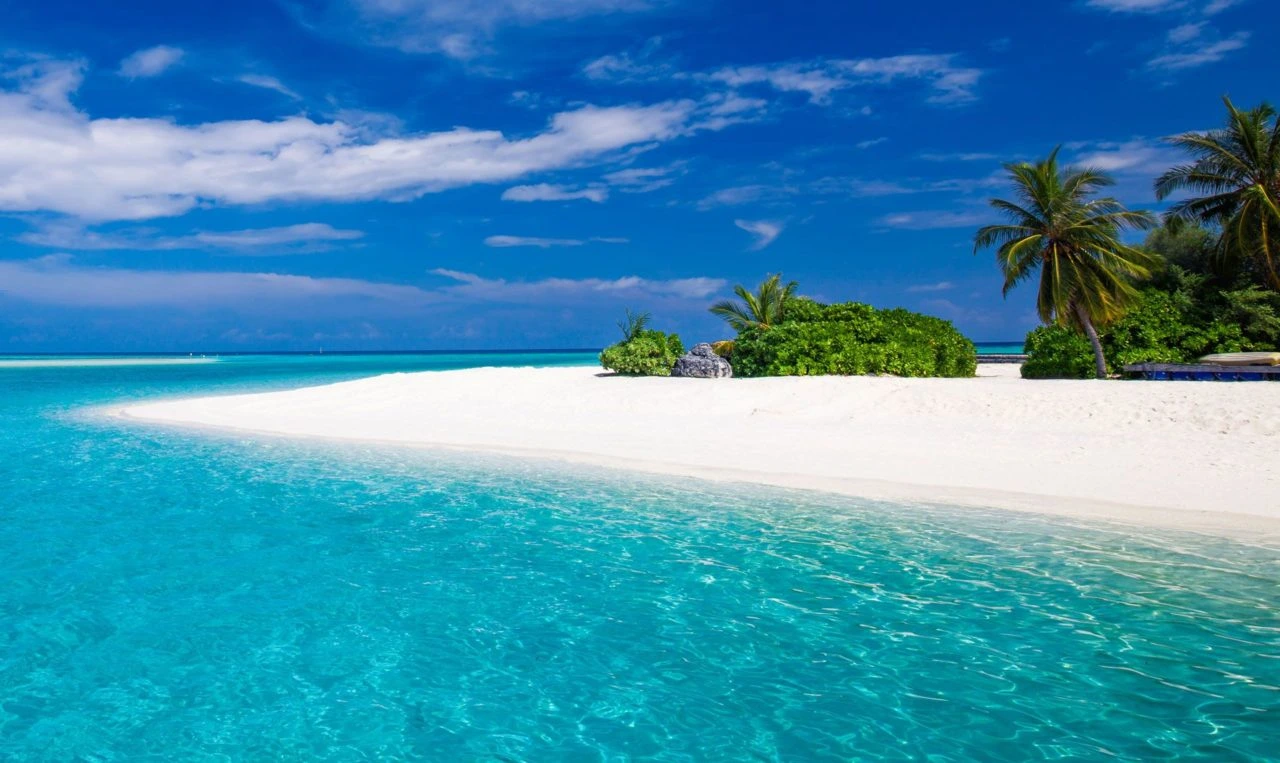
Best Time to Visit Zanzibar After a Safari
Plan the perfect beach extension after your safari with the best weather, timing, and travel tips.
Explore Guide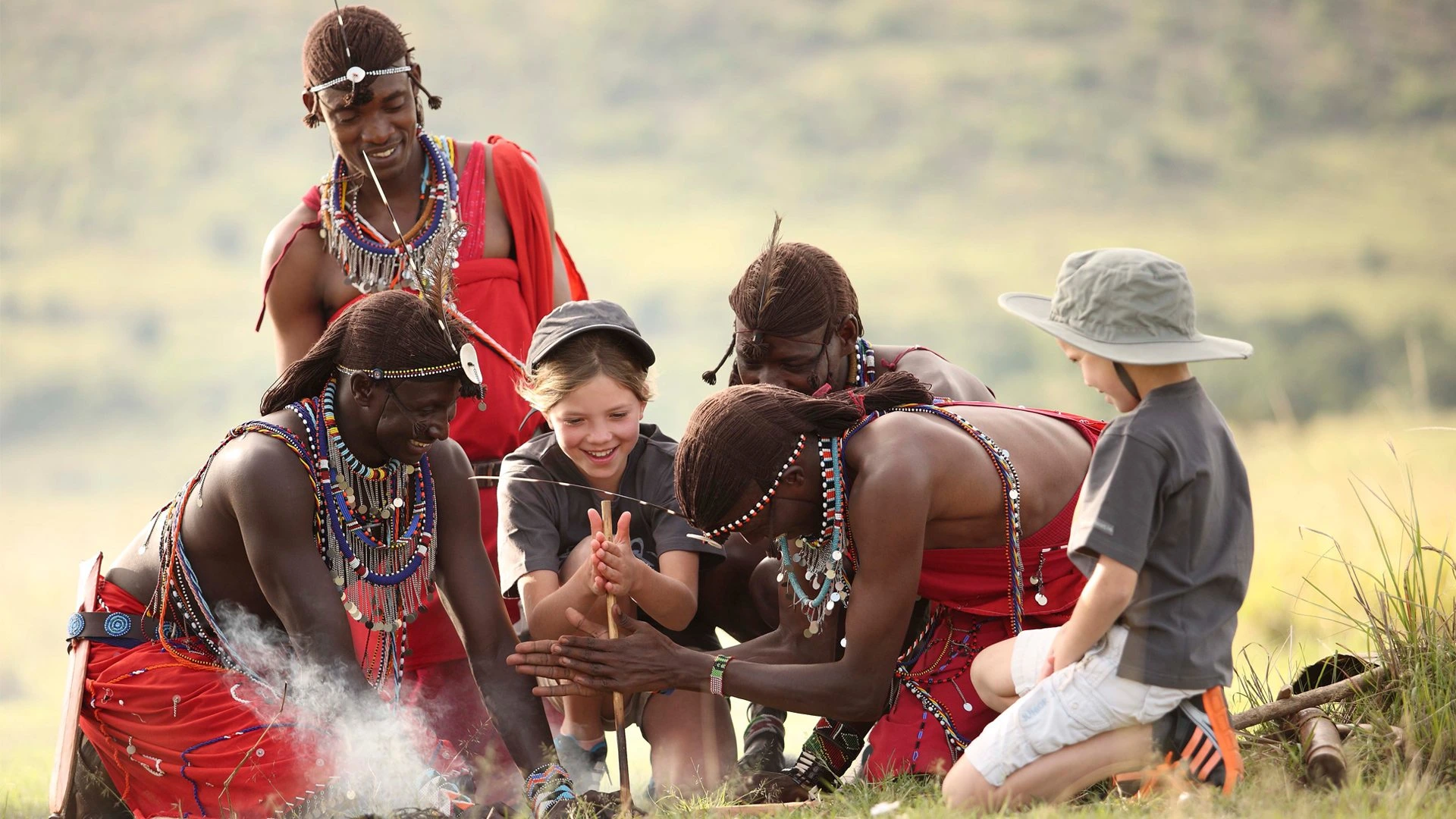
Guide
Family Safaris in Southern Tanzania
Discover how to plan a safe, exciting, and unforgettable safari experience for the whole family.
Explore Guide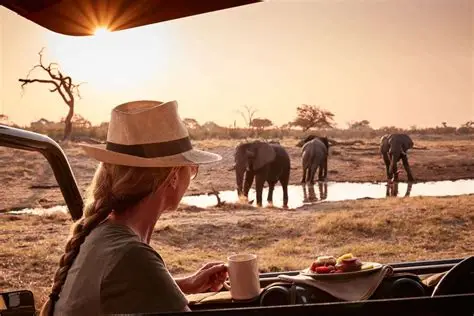
Guide
Tanzania Safari Types Explained
Understand the different safari styles to choose the experience that matches your travel goals.
Explore Guide
12 Days |
• Serengeti • Ngorongoro • Zanzibar |
Mid-range
12-Day Tanzania Honeymoon Safari & Zanzibar Escape
A romantic journey combining iconic wildlife encounters with a relaxing Zanzibar beach escape.
View Itinerary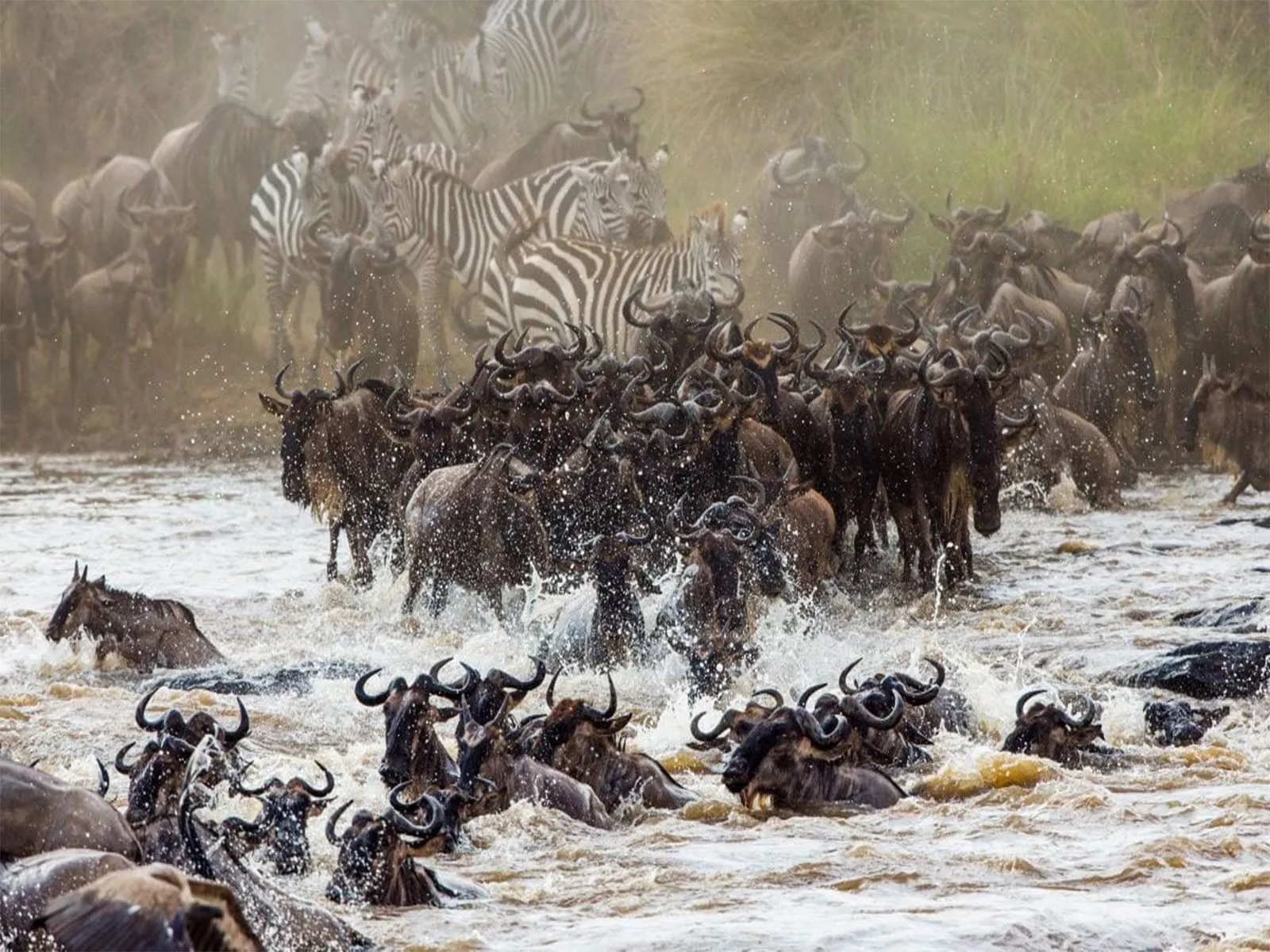
10 Days |
• Serengeti Migration • Zanzibar |
Mid-range
10-Day Wildebeest Migration Safari & Zanzibar Escape
Witness the Great Migration before unwinding on Zanzibar’s pristine beaches.
View Itinerary
5 Days |
• Serengeti • Ngorongoro |
Luxury
5-Day Luxury Safari in Serengeti & Ngorongoro
A short yet unforgettable luxury safari with exceptional wildlife viewing and premium lodges.
View ItineraryBest Time to Book Your Tanzania Safari
The Great Migration and peak safari seasons fill quickly. Secure your preferred lodges and guides by booking 3–6 months in advance.
Contact Us to Start Planning Your Safari Now →