
Ultimate Tanzania Safari Planning Guide (2026)
When, Where & How to Plan Your Perfect Safari in Tanzania — Expert Tips, Costs, Itineraries & Booking Strategies.
1. Overview
Planning a safari is one of the most exciting travel experiences in the world, but it can also feel overwhelming if you are visiting Africa for the first time. Tanzania is home to some of the planet’s most extraordinary wildlife destinations, vast wilderness areas, and iconic landscapes. From the endless plains of Serengeti National Park to the dramatic volcanic landscape of the Ngorongoro Crater, Tanzania offers some of the best wildlife viewing anywhere in Africa. This Tanzania safari planning guide explains everything you need to know before booking your trip — including the best time to travel, safari costs, how long to stay, which parks to visit, and how to design the perfect itinerary. Whether you dream of witnessing the Great Migration, photographing lions on the savannah, or combining your safari with a beach escape on the Indian Ocean, careful planning ensures your safari is unforgettable.2. Quick Expert Answer
Many travelers searching online simply want a clear expert answer before diving deeper into the details. The summary below explains the most important elements of planning a successful safari in Tanzania. What is the best way to plan a Tanzania safari? The best way to plan a Tanzania safari is to choose the right safari circuit, travel during the dry season between June and October for the best wildlife viewing, stay at least 6–10 days to explore multiple parks, and book your safari 6–9 months in advance to secure the best lodges and guides. Tanzania offers three main safari circuits — Northern, Southern, and Western — each offering different landscapes, wildlife density, and levels of exclusivity.3. Quick Safari Planning Reference
Planning a safari involves many decisions. The table below summarizes the most important planning considerations for travelers.| Planning Topic | Expert Recommendation |
|---|---|
| Best time to visit | June – October (dry season) |
| Ideal safari length | 6–10 days |
| Best circuits | Northern or Southern |
| Budget range | $250 – $1500+ per person/day |
| Booking timeline | 6–9 months in advance |
| Best wildlife park | Serengeti National Park |
4. Why Choose Tanzania for a Safari
Tanzania is widely considered one of the greatest safari destinations on Earth. The country contains some of Africa’s largest protected wildlife areas and hosts extraordinary biodiversity. A few reasons why Tanzania stands out include:- The Great Migration — the largest wildlife movement on Earth
- Massive national parks with minimal development
- Incredible predator populations
- Diverse ecosystems ranging from savannah to rainforest
- Opportunities to combine safari with beaches and mountains
5. Tanzania Safari Circuits Explained
Understanding Tanzania’s safari circuits is one of the most important steps in planning your safari. Each circuit offers a completely different style of safari experience, from world-famous wildlife plains to remote wilderness regions rarely visited by tourists.Northern Safari Circuit
The Northern Circuit is Tanzania’s most famous safari route. Major parks include:- Serengeti National Park
- Ngorongoro Crater
- Tarangire National Park
- Lake Manyara National Park
Southern Safari Circuit
Southern Tanzania offers a much more remote and exclusive safari experience. Key destinations include:- Nyerere National Park
- Ruaha National Park
Western Safari Circuit
The Western Circuit is Tanzania’s most remote safari region. Major parks include:- Mahale Mountains National Park
- Gombe Stream National Park
6. Northern vs Southern Safari Comparison
Many travelers struggle to decide whether they should visit the Northern Circuit or explore the more remote parks of Southern Tanzania. Both offer exceptional wildlife experiences but differ significantly in atmosphere, landscapes, and travel style.| Feature | Northern Tanzania | Southern Tanzania |
|---|---|---|
| Famous parks | Serengeti, Ngorongoro, Tarangire | Ruaha, Nyerere |
| Wildlife density | Extremely high | High but more spread out |
| Crowds | Moderate to busy in peak season | Very low |
| Safari style | Classic first safari | Remote wilderness |
| Travel logistics | Easier access | More remote |
7. Best Time to Visit Tanzania
Tanzania is a year-round safari destination, but the wildlife experience changes depending on the season.| Season | Months | Wildlife Viewing | Landscape |
|---|---|---|---|
| Dry Season | Jun – Oct | Excellent | Dusty, sparse vegetation |
| Short Rains | Nov – Dec | Good | Green landscapes |
| Green Season | Jan – Mar | Very good | Lush scenery |
| Long Rains | Apr – May | Limited travel | Very green |
8. Wildlife Viewing Calendar (Month-by-Month)
Wildlife experiences in Tanzania change throughout the year depending on rainfall, animal migration patterns, and vegetation levels. The table below provides a quick month-by-month overview of the best wildlife moments across Tanzania’s safari parks. Understanding these patterns helps travelers plan their safari around specific wildlife events.| Month | Wildlife Highlights |
|---|---|
| January | Migration calving season begins in southern Serengeti |
| February | Peak calving season and intense predator activity |
| March | Lush green landscapes and excellent photography |
| April | River crossings in northern Serengeti |
| May | Migration begins moving north across Serengeti |
| June | Dry season begins and wildlife gathers near water |
| July | First river crossings in northern Serengeti |
| August | Peak migration river crossings |
| September | Excellent predator sightings |
| October | Dry season wildlife concentrations |
| November | Short rains bring beautiful green scenery |
| December | Migration herds return toward southern Serengeti |
9. Wildlife Behavior and Seasonal Patterns
Wildlife behavior changes dramatically with the seasons. Understanding these patterns helps travelers choose the best time to visit and increases the chances of seeing dramatic wildlife encounters.Elephant Movements
In Tarangire National Park, elephants gather in enormous herds during the dry season when the Tarangire River becomes the only reliable water source in the region. Some herds exceed 300 elephants, making Tarangire one of the best places in Africa to observe elephant behavior.Predator Activity
Predators such as lions and leopards are easier to spot in the dry season because vegetation becomes thinner and prey animals concentrate near water.Great Migration
The famous wildebeest migration moves through the Serengeti ecosystem year-round in search of fresh grazing. The most dramatic river crossings occur between July and October.Great Migration Month-by-Month
The Great Migration is one of the most extraordinary wildlife spectacles on Earth. More than two million wildebeest, zebras, and gazelles move across the Serengeti ecosystem each year following fresh grass and rainfall. Understanding the migration cycle helps travelers choose the best time to visit.-
-
- January – February: Calving season in southern Serengeti plains
- March – May: Herds begin moving northwest
- June: Migration reaches western Serengeti
- July – October: Famous Mara River crossings in northern Serengeti
- November – December: Herds begin returning south
-
10. Park Deep Dive
Serengeti National Park
Serengeti National Park is arguably the most famous wildlife reserve in the world. The Serengeti ecosystem supports:-
-
- over 2 million wildebeest
- thousands of lions
- massive predator populations
-
Ngorongoro Crater
The Ngorongoro Crater is the world’s largest intact volcanic caldera. It contains one of the highest densities of wildlife in Africa. Visitors can often see the Big Five in a single day.Tarangire National Park
Tarangire National Park is famous for its giant baobab trees and massive elephant herds. The park becomes especially dramatic during the dry season when animals migrate into the Tarangire River valley.Ruaha National Park
Ruaha National Park is Tanzania’s largest national park. It is known for:-
-
- huge lion prides
- wild landscapes
- very few safari vehicles
-
Nyerere National Park
Nyerere National Park offers unique safari experiences such as boat safaris on the Rufiji River.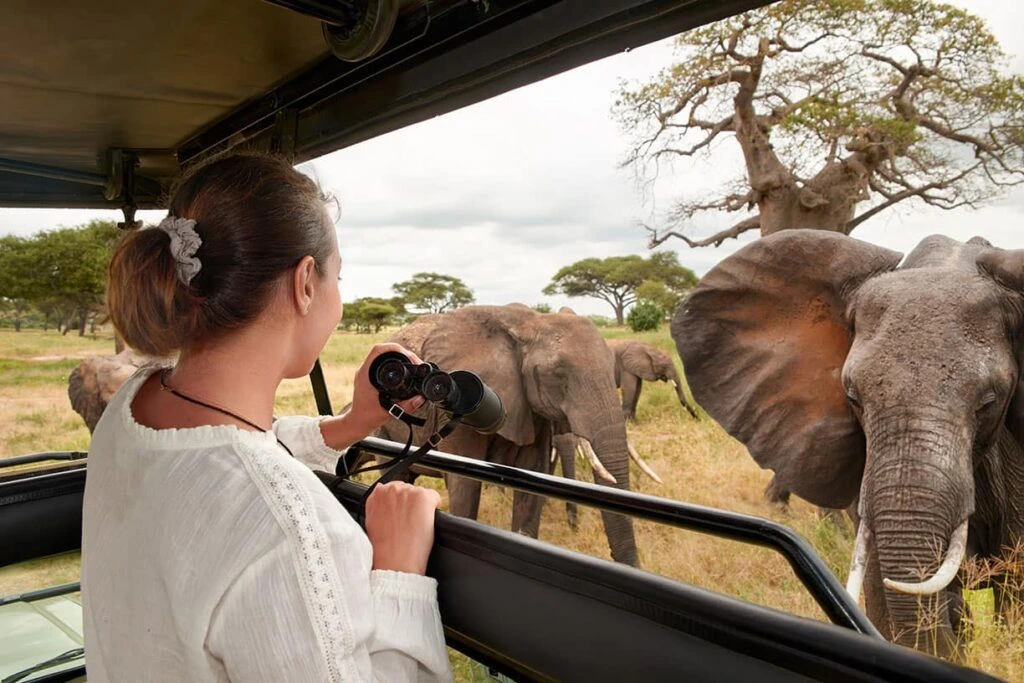
A traveler on safari. Planning and booking a safari in advance ensure early preparations, which guarantees a great and fulfilling experience.
11. How Long Should Your Safari Be?
Choosing the right safari duration is important for balancing travel time, wildlife viewing, and relaxation.| Safari Length | Experience |
|---|---|
| 3–4 days | Short introductory safari |
| 5–7 days | Classic safari experience |
| 8–10 days | Explore multiple regions |
| 10–14 days | Complete Tanzania adventure |
12. Tanzania Safari Costs Explained
Safari prices vary significantly depending on accommodation level and travel style.| Safari Type | Price Range (per person/day) |
|---|---|
| Budget | $200 – $350 |
| Mid-range | $350 – $700 |
| Luxury | $700 – $1500+ |
-
-
- park fees
- guide services
- accommodation
- game drives
- meals
-
13. What a Safari Experience Is Really Like
Many first-time travelers wonder what a typical safari day looks like. Safari days follow the natural rhythm of wildlife activity.-
-
- Early morning game drive
- Breakfast at camp
- Midday relaxation
- Afternoon game drive
- Sunset sundowners
-
14. First-Time Safari Advice
Travelers visiting Africa for the first time are often surprised by a few aspects of the safari experience.-
-
- Early mornings are essential for wildlife viewing
- Animals are most active at dawn and dusk
- Distances between parks can be large
- Patience is part of the safari experience
-
15. Common Safari Planning Mistakes
Avoiding these mistakes can dramatically improve your safari experience.-
-
- Booking too late for peak season
- Trying to visit too many parks
- Underestimating travel distances
- Not staying long enough in each park
-
16. Safari Planning Timeline
Planning a safari well in advance is extremely important, especially if you want to travel during peak wildlife seasons such as the Great Migration or the dry season between June and October. The best safari lodges often book out six to twelve months in advance, particularly in the Serengeti and Ngorongoro regions.| Timeline | Planning Step |
|---|---|
| 12 months | Research safari destinations |
| 9 months | Book safari operator |
| 6 months | Book international flights |
| 3 months | Prepare travel documents |
| 1 month | Final packing |
17. What to Pack for a Tanzania Safari
Packing correctly makes your safari much more comfortable. Internal safari flights in Tanzania usually have strict luggage limits, often around 15kg including carry-on bags, so soft duffel bags are usually recommended. Essential Safari Items-
-
- Neutral colored clothing
- Hat and sunglasses
- Camera with zoom lens
- Binoculars
- Sunscreen
- Insect repellent
-
18. Tanzania Safari Photography Tips
Many travelers visit Tanzania specifically to photograph wildlife. The country’s vast landscapes and abundant wildlife create incredible opportunities for photographers of all levels. Good safari photography often depends on lighting conditions, patience, and understanding animal behavior.For a complete guide to equipment, camera settings, and photography techniques,see our guide : Tanzania Safari Photography Guide
19. Beach Extensions After Your Safari
Many travelers combine their safari with a relaxing beach escape.-
-
- Zanzibar
- Mnemba Island
- Pemba Island
- Mafia Island
-
20. You Might Also Find These Helpful
Our famous Sample Itineraries:21. Tanzania Safari Planning Guide FAQs
1. What is the best month to visit Tanzania for safari? +
The best wildlife viewing occurs during the dry season between June and October.
2. Is Tanzania safe for safari travel? +
Yes. Tanzania is considered one of Africa’s safest safari destinations when traveling with reputable operators.
3. How much does a Tanzania safari cost? +
Prices typically range between $350 and $1500 per person per day depending on accommodation level.
4. How far in advance should I book a safari? +
Ideally 6–9 months in advance, especially for peak migration season.
5. Can I see the Big Five in Tanzania? +
Yes. Tanzania is one of the best places in Africa to see lions, elephants, buffalo, leopards, and rhinos.
6. Do I need a visa for Tanzania? +
Most travelers require a tourist visa which can be obtained online or on arrival.
7. Is the Great Migration visible year-round? +
Yes. The migration moves continuously through the Serengeti ecosystem.
8. Can I combine safari with a beach holiday? +
Yes. Many travelers combine safari with Zanzibar or other Indian Ocean islands.
22. Final Thoughts
Planning a safari in Tanzania is an extraordinary journey that combines wildlife, landscapes, culture, and adventure in ways few destinations can match. From the iconic plains of the Serengeti to the remote wilderness of southern Tanzania, every safari experience is unique. With proper planning, travelers can witness incredible wildlife events such as the Great Migration, explore diverse national parks, and finish their adventure with a relaxing beach escape on the Indian Ocean. Understanding the best time to visit, choosing the right safari circuit, and booking early are the keys to designing a truly unforgettable safari.23. Plan Your Tanzania Safari
Planning the perfect safari requires experience, local knowledge, and careful timing. The team at Twombili Tours specializes in designing tailor-made safaris across Tanzania’s most spectacular wildlife destinations. Whether you want to witness the Great Migration in the Serengeti, explore the wild landscapes of southern Tanzania, or combine safari with a beach escape, we can help you design the perfect journey.