
Tanzania Safari Photography Guide
What is Tanzania Safari Photography?
Tanzania safari photography is a specialized wildlife travel experience focused on capturing high-quality images of Africa’s iconic wildlife, landscapes, and cultural encounters. It combines knowledge of animal behavior, lighting conditions, and seasonal patterns to produce images that tell compelling stories. Whether you’re a beginner or an experienced photographer, understanding the parks, gear, and photography techniques is key to capturing memorable shots.
1. Best Parks for Safari Photography
Northern Circuit- Serengeti National Park: Big Five, wildebeest migration (best months: July–October for river crossings). Wide plains allow aerial-style compositions. Early mornings 6–9am and late afternoons 4–6pm are ideal golden-hour windows.
- Ngorongoro Crater: Dense wildlife and crater landscapes. Elevated viewpoints offer sweeping panoramas. Lions and elephants are abundant near waterholes.
- Lake Manyara & Tarangire: Birdlife-rich environments, elephants with iconic baobab trees. Tarangire is excellent for late afternoon lighting and shadows.
- Ruaha National Park: Less crowded, perfect for unobstructed shots of elephants, lions, and rare predators. Beanbags, swivel seats, and private vehicles enhance photography. Sunrise: 6–8am; Sunset: 5–7pm.
- Selous (Nyerere National Park): Boat safaris for water-level perspectives of hippos, crocodiles, and birds. Reflections create creative compositions. Fewer crowds allow longer observation periods.
- Coastal sunsets, dolphins, sea turtles, and vibrant street scenes. Wide-angle lenses work best for architecture and environmental storytelling.
2. Seasons, Light & Species Concentration
Dry Season (June–October)- Clear skies, wildlife concentrated near water, perfect for silhouette and backlit shots.
- Golden hours: Sunrise ~6–8am, Sunset ~5–7pm.
- Great Migration: Best for photographing river crossings and predator-prey interactions.
- Species concentrations vary: Serengeti for wildebeest, Ruaha for elephants, Tarangire for baobab-background shots.
- Lush landscapes, newborn wildlife, vibrant birdlife, and excellent macro photography opportunities.
- Cloudy skies diffuse light, ideal for balanced exposures. Bring rain covers and quick-dry cloths.
3. Photography Gear Essentials
- DSLR or mirrorless camera with telephoto lens (200–600mm)
- Wide-angle lens for landscapes and architecture
- Macro lens for birds and insects
- Tripod or monopod for stability
- Extra batteries, memory cards, weather protection, lens cleaning kit
- Polarizing filter for enhanced skies and reduced glare
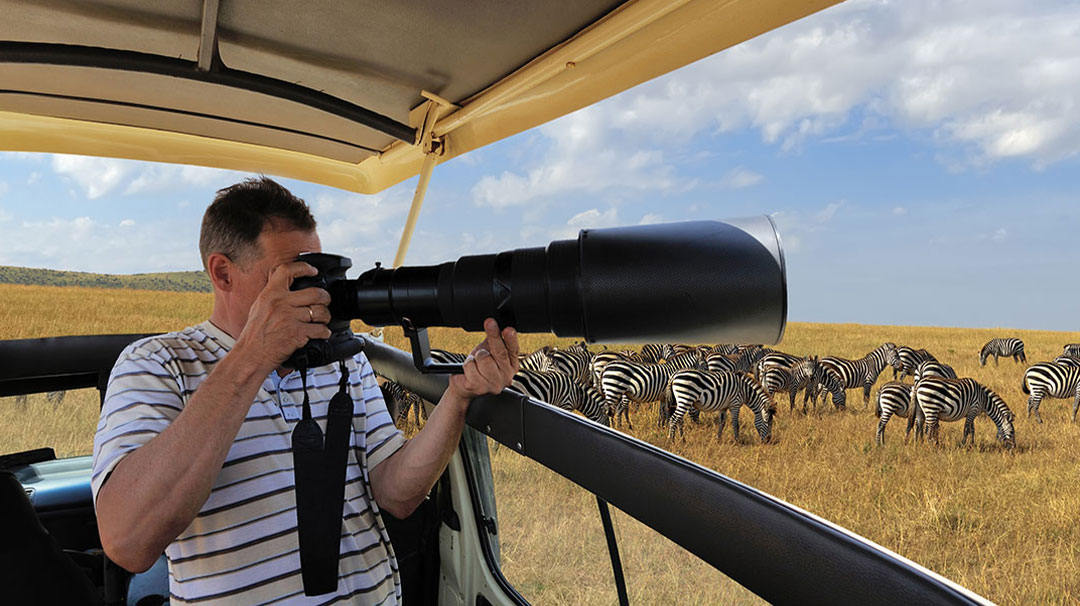
4. Vehicle & Guide Considerations
- Private or photography-specialist vehicles with open roofs are essential for unobstructed shots.
- Guides know animal behavior and optimal vehicle positioning for light angles.
- Use beanbags, swivel seats, and vehicle modifications for smoother shots.
- Duration of photography safaris typically 5–7 days; longer for migration-focused trips.
- Permits: Drones are generally restricted; always confirm local regulations.
5. Tips for Wildlife Photography
- Patience: anticipate animal behavior.
- Use natural frames for depth.
- Experiment with perspective: low angles, roof-top shots, or hiding in blinds.
- Adjust ISO, shutter speed, and aperture dynamically.
- Use burst mode for fast-moving action.
- Observe herd patterns for storytelling sequences.
6. Combining Photography Safaris with Other Experiences
- Zanzibar: sunsets, coastal wildlife, cultural photography.
- Walking & boat safaris in Southern Tanzania for alternative angles.
- Capture village life, traditional ceremonies, local markets.
- Night photography: stars and nocturnal wildlife in remote areas.
You Might Also Find These Helpful
- Northern Tanzania Safari Guide
- Serengeti Safari Guide
- Tanzania Safari Types Explained
- What to Pack for a Safari and Beach Honeymoon
Frequently Asked Questions (FAQs)
Do I need professional experience for a photography safari? +
Which safari circuit is best for landscape shots? +
What lens is best for Tanzania wildlife? +
When is the Great Migration best for photography? +
Is a private vehicle necessary? +
How much does a photography safari cost? +
Which parks are less crowded? +
Can beginners join? +
Are drones allowed? +
What’s the best circuit for photographing elephants? +
